
Thursday, July 4, 2013
Blog Moved
Our new blog can be found at http://libraryblogs.is.ed.ac.uk/edinburghuniversityarchives/. All content com this blog has been migrated. Please adjust your bookmarks.

Our blog is moving
We will soon be moving our blog fully in-house to the new Library and University Collections blog server. St the moment we're busy migrating content. The new blog can be found at http://libraryblogs.is.ed.ac.uk/edinburghuniversityarchives/
Monday, June 24, 2013
Edinburgh’s first women graduates honoured 50 year later
On 13 April 1893, eight women graduated MA, the first women
students having been admitted the previous year following a lengthy battle to
allow women admittance to the University.
The eight women had already completed most of their exams externally and
were awarded their degree within a year of admittance. The same year they graduated, a further 72
matriculated to study, with an additional 78 attending as non-matriculated
students.
In July 1943, three of the eight joined Principal Sir Thomas
Holland on the platform for the graduation ceremony in the McEwan Hall: Flora Stewart,
nee Philip, Maude Elizabeth Newbigin and Amelia Hutchison Stirling. We blog this
to mark 120 years since their graduation.
 |
| Sir Thomas Holland with (l-r) Mis Newbibin, Miss Stirling and Mrs. Stewart |
Wednesday, March 13, 2013
Henry Duncan Littlejohn notebook found
Born in 1826, the son of a prosperous merchant, Littlejohn was also credited by Conan Doyle as having been an influence. He graduated from the University of Edinburgh in 1847 and became a Fellow of the Royal College of Surgeons in 1854. The same year saw him take up the position with Edinburgh Town Council as Police Surgeon. In 1862 he was appointed Edinburgh's first Medical Officer of Health. The work he undertook had a significant impact on reducing the frequency of outbreaks of smallpox and typhus.
He was President of the Royal College of Surgeons of Edinburgh (1875-6), of the Medico-Chirurgical Society of Edinburgh (1883-5), and of the Institute of Public Health (1893). Awarded an honorary degree by the University of Edinburgh in 1893, he was knighted two years later.
Littlejohn was appointed to the Chair of Medical Jurisprudence at the University of Edinburgh in 1897. In the context of that post, a series of his notebooks were kept by his successors within the departmental records of the Forensic Medicine department. However when these arrived in the University Archives volume "Wounds II" was noted as being absent. Thanks to the vigilance of a member of academic staff, this missing volume has now been found and transferred to us.
 |
| Page of notes pasted into volume 'Wounds II'. |
We are thrilled to be able to reunite this volume with the others. the series now runs to 6 volumes in total:
- Infanticide I
- Infanticide II
- Poisons III
- Poisons IV
- Wounds I
- Wounds II
The 'new' volume is of a similar format to the others with notes, news cuttings and loose enclosures.
Sunday, December 16, 2012
Quartercentenary Collection
 |
| Notice relating to Scottish Parliamentary Debate, 1938 |
We have now begun a full survey of items in the collection was begun and to date nearly 850 items have been documented. These will form the basis of new catalogue records.
Largely though not exclusively representing the 'student experience, this collection is a real treasure trove and we are glad to being close to make it easily accessible for research.
Monday, August 27, 2012
Neil Armstrong
In memory of astronaut Neil Armstrong, we are displaying the award by the University of Edinburgh to him of Doctor Honoris Causa. The ceremony took place a the British Embasy in Washington on 13 June 2008.
We hold the certificate (shown here) in the University Archives.
Further details of the event is on the main University website.
We hold the certificate (shown here) in the University Archives.
 |
| © University of Edinburgh |
Further details of the event is on the main University website.
Thursday, August 16, 2012
University Mace stolen - reward offered!
On the night betwixt the 29th/30th October 1787 the door of the Library was broken open by thieves and the University Mace was stolen from the press where it was usually deposited. The Magistrates offered a reward of ten Guineas for the discovery of the Delinquents.'NB' inset entered between the College minutes for 11th September and 3rd December 1787.
The University would appear to have been without a mace until 1789. William Creech presented the College with a new one at the meeting of 2nd October that year. At the same meeting it was reported that the University been granted Arms by the Lord Lyon and that a new seal was to be made, the use of one of the city's seals being "inconvenient and unsuitable to the dignity of the University".
Monday, August 6, 2012
Early Veterinary students
Although our registers of students who attended the Edinburgh / Royal Dick Veterinary College only begin in the 1860s, the college itself was established in 1823. Although, unlike the University, there is no easily-identifiable published list of early students, one does in fact exist. Included in William Dick's 'Occasional Papers' (published 1869) is a list of all the graduates.
The list gives their name, year of graduation and place of residence. Cornell University have a digitised copy of the entire publication at http://archive.org/details/cu31924000347975
The list gives their name, year of graduation and place of residence. Cornell University have a digitised copy of the entire publication at http://archive.org/details/cu31924000347975
Tuesday, January 17, 2012
Why no posts?
Our blog is temporarily silent due to various other commitments. We hope to begin posting items of interest again by this spring (or even before if we can manage).
Best wishes to all our followers.
Best wishes to all our followers.
Wednesday, July 13, 2011
Crowd Control
The following letter was sent, we think to Prof T. C. Hope, Professor of Chemistry, by a student in 1844. Student misbehaviour is nothing new!
Dear Sir,
You cannot but have observed, and been annoyed, at the constant disorderly contact of some of the young gentleman of your class. You have hitherto been too forbearing to take any notice of it but I trust you will allow me to prefer the request (in which I am sure the majority of my fellow students join) that you would be so kind as to endeavour, by some means or other, to put a stop to a recurrence of it for to say nothing of the great annoyance it must be to yourself.
I am sure you will agree that it really is "trop mal" that those who are anxious to pay attention to the Lectures should be prevented from doing so by the few juveniles who perch themselves on the upper seats for no earthly purpose but childishly amuse themselves during the whole Lecture by throwing paper balls and creating a disturbance to the no small annoyance of their more peaceable neighbours - Trusting you will excuse this communication.
Yours with the greatest of respect,
One of your Class
Feb'y 15th 1844
Wednesday, May 4, 2011
Jobs for the girls
A recent enquiry threw light on the richness of information contained in the minutes of Library Committee. The enquiry itself related to Marjory Foljambe Hall, daughter of Hubert Hall, Assistant Keeper of the Public Record Office in London, who was meant to have been employed circa 1917/1918 as a Librarian at the University of Edinburgh.
As she was not listed in the University Calendar, the post must have been below that of Assistant Librarian. There was a chance that the appointment would have been noted at Library Committee, but it was not expected that there would be much detail.
On locating the relevant minute however it was found that the section dealing with Miss Hall's appointment occupied almost a full page, giving information both on her and the method by which she was appointed.
A vacancy had occurred due the departure of a member of cataloguing staff to get married. At the suggestion of Prof. Peter Hume Brown, the Librarian, Frank Carr Nicholson, wrote to Hubert Hall on the basis that he was aware Hall's daughter was looking for a post. The responses received from both Hubert and Marjory were read before the committee. The minutes note:
"It appeared from these documents that Miss Hall had done a considerable amount of work at the Record Office and for the Royal Historical Society, and that she had gone through a course of Library training, palaeography etc. The Committee were of the opinion that her qualifications were exceptionally good."
She was at a salary of seven pounds per month plus War bonus of ten pounds per annum. Unfortunately her contract was terminated at the end of May 1918, following a decision to suspend indefinitely the printing of the Library Catalogue.
The enquirer informed us that Marjory went on to work at the National Library of Wales before becoming a nun.
[University of Edinburgh Library Committee, Ref: EUA IN1/COM/L1]
As she was not listed in the University Calendar, the post must have been below that of Assistant Librarian. There was a chance that the appointment would have been noted at Library Committee, but it was not expected that there would be much detail.
On locating the relevant minute however it was found that the section dealing with Miss Hall's appointment occupied almost a full page, giving information both on her and the method by which she was appointed.
A vacancy had occurred due the departure of a member of cataloguing staff to get married. At the suggestion of Prof. Peter Hume Brown, the Librarian, Frank Carr Nicholson, wrote to Hubert Hall on the basis that he was aware Hall's daughter was looking for a post. The responses received from both Hubert and Marjory were read before the committee. The minutes note:
"It appeared from these documents that Miss Hall had done a considerable amount of work at the Record Office and for the Royal Historical Society, and that she had gone through a course of Library training, palaeography etc. The Committee were of the opinion that her qualifications were exceptionally good."
She was at a salary of seven pounds per month plus War bonus of ten pounds per annum. Unfortunately her contract was terminated at the end of May 1918, following a decision to suspend indefinitely the printing of the Library Catalogue.
The enquirer informed us that Marjory went on to work at the National Library of Wales before becoming a nun.
[University of Edinburgh Library Committee, Ref: EUA IN1/COM/L1]
Monday, April 4, 2011
What's in a Diploma?
We often get enquiries about what individual courses comprised. From 1858, the annual University Calendar is usually the best source of information on this. For example, the Diploma in Psychiatry in 1936 is summarised as follows:
The Diploma consisted of 325 hours of course time, broken into two parts.
Part 1:
1) Anatomy and the Nervous System (20 hours), Prof. Brash & Demonstrators
2) Physiology of the Nervous System (20 hours), Prof. de Burgh Daly & Lecturers
3) Psychology and Experimental Psychology (50 hours), Prof. Drever
Part 2:
1) Neuro-Pathology and Serological Methods (40 hours), Prof. Drennan & Dr. Biggart, lecturer
2) Clinical Neurology (80 hours), Prof. Bramwell
3) Clinical Psychiarty (115 hours), Prof. Henderson
The Diploma consisted of 325 hours of course time, broken into two parts.
Part 1:
1) Anatomy and the Nervous System (20 hours), Prof. Brash & Demonstrators
2) Physiology of the Nervous System (20 hours), Prof. de Burgh Daly & Lecturers
3) Psychology and Experimental Psychology (50 hours), Prof. Drever
Part 2:
1) Neuro-Pathology and Serological Methods (40 hours), Prof. Drennan & Dr. Biggart, lecturer
2) Clinical Neurology (80 hours), Prof. Bramwell
3) Clinical Psychiarty (115 hours), Prof. Henderson
Tuesday, January 25, 2011
The 31 Club
The 31 club was a small group formed by the Honours Classics graduates at the University in 1931, to "perpetuate friendships made by the members while they were Classical students at Edinburgh University". They first met in May 1931 and thereafter regularly for the next four years.
A small reunion in 1966 is next minuted, then 1991. By the time of the meeting in 1991, six 'survivors' are named, including the late Prof. William Montgomery Watt (1909-2006).
We have just taken custody of the archives of the club.
A small reunion in 1966 is next minuted, then 1991. By the time of the meeting in 1991, six 'survivors' are named, including the late Prof. William Montgomery Watt (1909-2006).
We have just taken custody of the archives of the club.
Friday, January 7, 2011
Wednesday, December 8, 2010
My ancestor was at Moray House?
 We get a lot of enquiries from individuals who know or think that their ancestor did some teacher training at Moray House. The history of teacher training and of Moray House is quite complex, one of various small institutions merging and then merging again before eventually becoming part of the University. Depending on the time period, the phrase 'Moray House' can be misleading.
Helpfully there is an easy to read online history of all of this, compiled by a former senior academic and administrator from Moray House. This provides some extremely useful background reading which will help you contextualise any enquiry you might wish to send us.
A History of Professional Training at Moray House
Tuesday, November 2, 2010
Sir Arthur Conan Doyle Prize
 Sir Arthur Conan Doyle was born in Edinburgh in 1859 and attended Edinburgh University as a medical student from 1876 to 1881. A recent enquiry threw light on the establishment of this prize at his request.
From information located in the minutes of the Senatus Academicus.
4th July 1902
A letter was read from the University Court enclosing a letter from Dr. Arthur Conan Doyle in which he proposed to found a "Conan Doyle Scholarship" in the University, to be competed for by students of South African birth; and requesting the Senatus to state how, in their opinion, this can best be done. The Senatus remitted Dr. Conan Doyle's letter to the Principal & Dean's Committee, with powers to communicate their opinion direct to University Court.Senatus Minutes 25 July 1902
A letter was read from the University Court, stating that the Court approved of the reccomendations made by the Principal & Deans Committee on behalf of the Senatus, that the proposed Conan Doyle Scholarship should be attached to the Faculty of Medicine, and requesting the Senatus to frame Draft Regulations for the approval of Court. A letter was also enclosed from Sir Conan Doyle stating that he had no conditions to attach to the Scholarship, except that it should be called the "Conan Doyle Scholarship", and be awarded to South Africans. The Senartus remitted to the Faculty of Medicine to frame Regulations for the Scholarship.1st November 2002
The Dean of the Faculty of Medicine reported that the Faculty had drafted Regulations for the Conan Doyle Scholarship, but that since doing so a letter from Sir Conan Doyle had been transmitted to them by the University Court, which imposed a further condition from which it was not clear whether a Bursary or Scholarship was contemplated. The Senatus remitted to the Faculty to communicate with Sir Conan Doyle, and ascertain his wishes on the subject.6th December 1902
The Faculty of Medicine submitted the following Regulations which they had drawn up for the Conan Doyle Prize:-
1. That the Prize be awarded each year on the Graduation Day to the most distinguished graduate (M.B.Ch.B.) from South Africa, as determined by the marks received at the various rofessional Examinations.
2. That the Conan Doyle Prizeman should be free to receive any other Prize, Scholarship, or Fellowship, which the Senatus, on the recommendation of the Faculty, see fit to award him.
The Senatus approved.
Thursday, October 28, 2010
Women students 1870s-1890s
Women were only allowed to graduate from the University following measures put in place following the Universities (Scotland) Act, 1889. The first female undergraduates at Edinburgh were admitted in 1892 and eight graduated in 1893, all of them having previously studied at classes given by the Edinburgh Association for the University Education for Women. By 1914 a thousand women had degrees from Edinburgh University.
Women were not totally excluded prior to this and over 140 awards of Certificate in Arts were made 1876-1894. We have added details of these students to our growing online database of students at http://www.archives.lib.ed.ac.uk/students/
Thursday, October 21, 2010
The Old Medical School and McEwan Hall
 The idea for new and improved medical buildings had been mooted since 1869 and letters in this bundle refer to the N[orth] College Street Improvement Committee. There are also letters from David Baxter from Kilmaron in Fife, who was to bequeath £20,000 to the University Building Scheme on his death.
It was this bequest that allowed the “General Building Committee and Acting Sub Committee” to start looking in earnest in Jan 1874 and a Public Meeting to raise funds was held in April 1874 in Edinburgh, with another in London in December of the same year. This public appeal raised £82,000 and an application was made to the Government for the rest of the money . It was estimated that the cost of erecting the new buildings and purchasing the site would be £187,000.
The Government voted the University £80,000 payable in four instalments, and further appeals increased the amount raised. The money was administered by Trustees after the parliamentary money was granted in 1874. Each time a new issue arose regarding the building work, a sub-committee was established, although they all reported back to the main building committee and so references to their activities are in the main run of minute books.
Between 1870 and 1874 three sites were considered for the new medical buildings. These were Chambers Street, the New Royal Infirmary grounds and Park Place and Teviot Row near Reid’s Music Room . A problem arose over a “servitude”in Park Place Lane and it was this site which was considered the most appropriate by 1874. Land had to be swapped with the City of Edinburgh Road Trustees in 1875 and also in 1875 a subcommittee was formed with the intention of removing any remaining servitudes over any part of the site.
An architectural competition was held to determine who should design the new buildings and a number of leading architects were invited to submit entries. After consultation to determine the requirements of the faculty of medicine for the new building, and discussion of the comparative merits of the plans , the minute for 29 Jan 1874 stated “Mr Rowand Anderson to be employed as Architect for the new building of the University.” The design as shown in the image above was modified however, the San Marco-type campanille never been having built.
Once the new medical buildings were nearing completion, there was still no Academic Hall in existence as the University had run out of money. In 1886 one of the University Buildings Extension Committee put forward the money for the purpose of obtaining an Act of Parliament so that the University could acquire the site for a new academic hall at Park Street. The compulsory powers required were obtained, but they had a limited time frame and the University needed to find money to fund the hall. William McEwan of the Edinburgh Brewing family, offered to fund the building work if the University would find money for the site in 1886. The sum needed was £12,000 but the University was unable to find this amount. A University deputation went to London to ask the Government to include this sum in the Parliamentary estimates for the year. The Treasury finally offered £8,000 in two instalments in Mar 1887, and William McEwan provided the other £4,000. In June 1888 it was revealed that the new building was to be called the McEwan Hall.
The formal transfer of the New Buildings to the Senatus Academicus was passed by Resolution of the New Building Committee on 26 Oct 1888 . The work of the Building Committee was now considered to be complete, with the McEwan Hall underway, although this was not completed and handed over to the University until 1897 .Between 1903 and 1909 there was a new fundraising appeal which called itself the University Improvement and Expansion Appeal Committee.
University Buildings Extension Scheme, Ref: EUA IN1/COM/B2
Monday, October 18, 2010
An Academic Dynasty
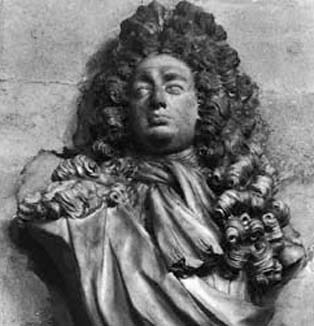
A chance investigation into the relationship between two of our early Professors of Mathematics, David Gregory [shown] (1659-1708) and James Gregory (1638-1675), has revealed a complex web of family relationships within Scottish academia over at least two centuries.
Other individuals include William Pultney Allision (1790-1859), Professor of the Practice of Physic, University of Edinburgh and Thomas Reid (1710-1796), Professor of Moral Philosophy, University of Glasgow. The line of enquiry continues ....
Thursday, October 14, 2010
The Drever succession
 James Drever, born in Orkney in 1873, became a student at the University of Edinburgh in 1889, graduating MA before continuing to study medicine. After spending some time as assistant to the Professor of Education, he was appointed Combe Lecturer and placed in charge of the Psychology Department in 1918. In 1931 he became the first Professor of Psychology at the University, the first post of its kind in Scotland. In 1944 he was succeeded by his son, James Drever (1910-1991). James (jnr.) went on to become Principal and Vice Chancellor of the University of Dundee.
This photograph is taken from an album of such photographs that was commissioned by the University and completed in 1936. It features senior academic and other figures along with associated individuals. The complete set of photographs can currently be viewed on our Flickr Photostream.
Reference: EUA CA1/1
Subscribe to:
Posts (Atom)